
Introduction
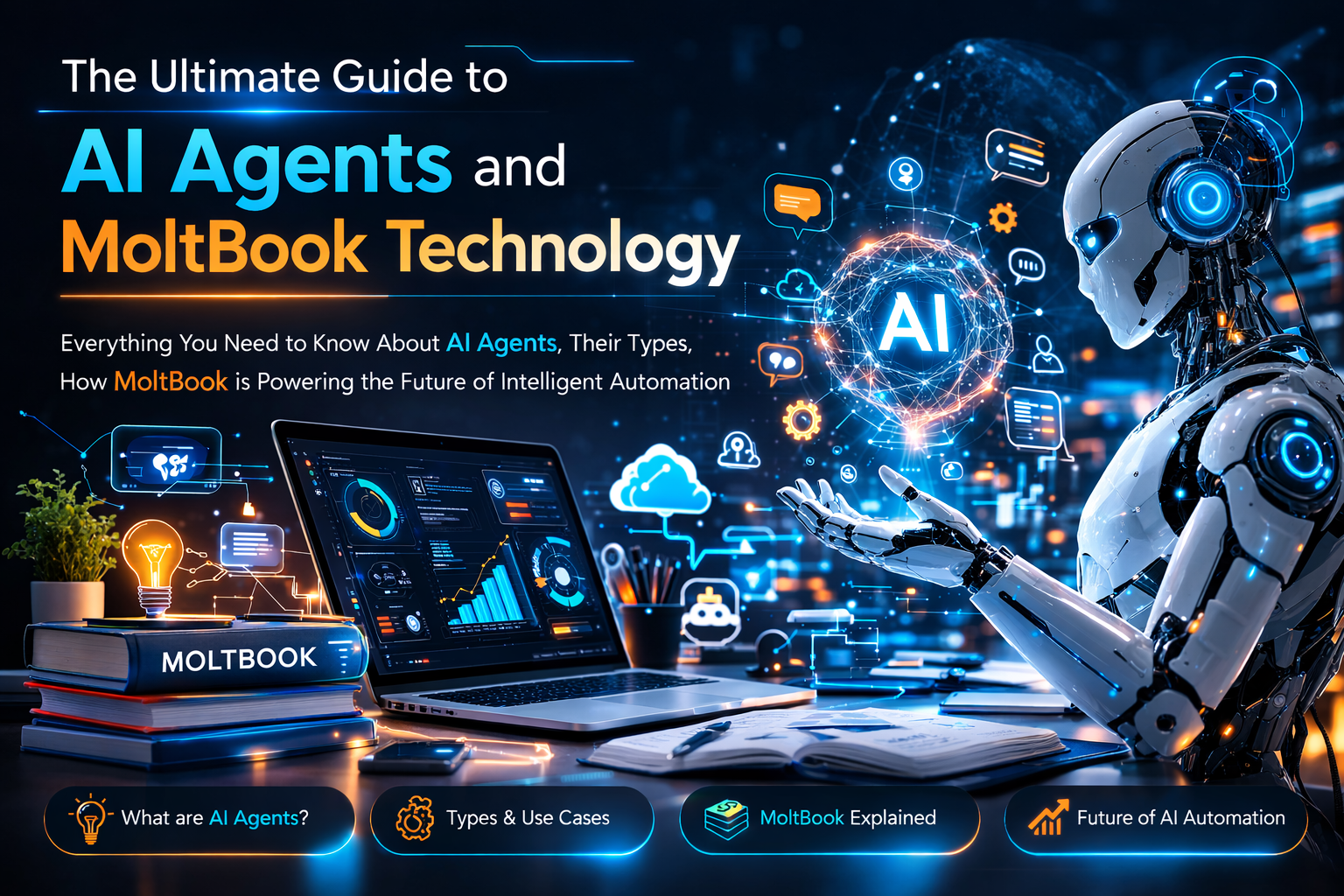
In today’s fast-paced digital world, AI agents are no longer a futuristic concept — they are a part of everyday life, driving efficiency, intelligence, and automation. These intelligent systems can perceive environments, make decisions, and act autonomously to accomplish goals. Among the most innovative platforms utilizing this technology is AI agents MoltBook, which combines automation, learning, and intelligent workflows for businesses and individuals.
In this ultimate guide, we will explore what are AI agents, their types, applications, how MoltBook leverages them, and the future of AI-driven systems. By the end of this article, you will have a complete understanding of AI agents and their role in shaping the modern digital landscape.
Introduction to AI Agents
What Are AI Agents?
AI agents are software programs that act autonomously to achieve specific objectives. Unlike conventional software, AI agents have the capability to perceive their environment, analyze information, make decisions, and take actions. They can also learn and adapt based on experience.
For instance, a virtual assistant like Siri or Alexa analyzes user commands, predicts intentions, and provides intelligent responses. Similarly, AI agents in businesses can automatically manage workflows, detect anomalies, and optimize operations.
Why AI Agents Matter Today
The significance of AI agents lies in their ability to enhance productivity and reduce human effort. Businesses increasingly rely on AI agents to:
-
Automate repetitive tasks
-
Provide intelligent recommendations
-
Process large volumes of data quickly
-
Reduce operational costs
Even individual users benefit from AI agents through smart home devices, personalized recommendations, and digital assistants that streamline daily life.

Types of AI Agents
AI agents can be classified based on their design, intelligence, and learning capabilities.
Reactive AI Agents
Reactive agents operate solely in the present, reacting to changes in their environment without memory of past experiences.
Pros:
-
Fast response times
-
Simple design and implementation
Cons:
-
Cannot learn from past interactions
-
Limited adaptability
Example: A thermostat adjusting temperature based on current conditions without considering previous patterns.
Deliberative AI Agents
Deliberative agents make decisions by analyzing current states, goals, and potential outcomes. They often use planning mechanisms to choose optimal actions.
Pros:
-
Handles complex tasks
-
Can anticipate future states
Cons:
-
Slower than reactive agents
-
Requires more computational resources
Example: A logistics AI that plans delivery routes considering traffic patterns and delivery deadlines.
Hybrid and Learning Agents
Hybrid AI agents combine reactive and deliberative features and often incorporate machine learning to adapt and improve over time.
Pros:
-
Adaptive and intelligent
-
Suitable for dynamic, complex tasks
Cons:
-
More complex to design
-
Requires large datasets for training
Example: AI agents MoltBook that automate workflows, analyze performance metrics, and optimize decision-making based on continuous learning.
AI Agents in Practice
AI Agents in Businesses and Industries
Businesses have embraced AI agents to improve efficiency, reduce errors, and increase revenue. Some applications include:
-
Customer Service: AI chatbots and virtual assistants handle inquiries 24/7.
-
Data Analytics: AI agents analyze large datasets to identify trends and insights.
-
Supply Chain Management: Agents monitor inventory, forecast demand, and optimize logistics.
-
Marketing Automation: AI agents segment audiences, personalize campaigns, and predict customer behavior.
AI Agents in Everyday Life
AI agents are also increasingly visible in personal applications:
-
Smart assistants like Google Assistant, Alexa, and Siri
-
Streaming platforms suggesting personalized content
-
E-commerce platforms recommending products based on browsing history
-
Smart home devices controlling lighting, temperature, and security systems
AI Agents MoltBook – A Closer Look

What Is MoltBook Technology?
AI agents MoltBook is a platform designed to integrate intelligent agents into a single workflow. It allows users and organizations to automate repetitive tasks, receive intelligent insights, and interact with adaptable AI agents.
MoltBook is designed for versatility, enabling businesses to implement AI agents without extensive technical expertise. Its capabilities span automation, decision support, and learning for continuous improvement.
Features of AI Agents MoltBook
| Feature | Description |
|---|---|
| Automation | Handles repetitive and time-consuming tasks efficiently |
| Decision Support | Provides intelligent insights and recommendations |
| Learning | Continuously improves performance using AI algorithms |
| Multi-Platform | Works across apps, devices, and software |
| User-Friendly Interface | Simplifies interaction with AI agents |
| Integration | Easily connects with existing business systems |
| Analytics | Tracks performance and identifies optimization opportunities |
Benefits of Using AI Agents MoltBook
Implementing AI agents MoltBook brings measurable advantages:
-
Enhanced Productivity: Automates complex and repetitive processes
-
Error Reduction: Minimizes human mistakes in workflows
-
Intelligent Decision-Making: Provides actionable insights for better results
-
Scalability: Suitable for both small teams and large organizations
-
Continuous Improvement: Learning capabilities allow agents to optimize over time
How AI Agents Work Behind the Scenes
Algorithms and Decision-Making
AI agents function using a combination of algorithms that allow perception, decision-making, and action. Key components include:
-
Rule-Based Systems: Basic decision-making using predefined rules
-
Machine Learning Models: Learn patterns from historical data
-
Reinforcement Learning: Agents adapt behavior based on rewards and feedback
Learning and Adaptation
A hallmark of AI agents MoltBook is their ability to learn and adapt. Learning agents refine their actions based on outcomes and feedback, improving performance over time. For example, a MoltBook AI agent in a marketing team can analyze past campaign performance and suggest optimized strategies for future campaigns.
Advanced Applications of AI Agents
AI agents are no longer limited to simple automation. Advanced applications include:
-
Autonomous Vehicles: AI agents control navigation, detect obstacles, and make split-second decisions.
-
Healthcare: Agents assist in diagnostics, patient monitoring, and treatment planning.
-
Finance: AI agents analyze market trends, automate trading, and manage risk.
-
Education: AI tutors adapt learning material to student progress.
Future of AI Agents and MoltBook
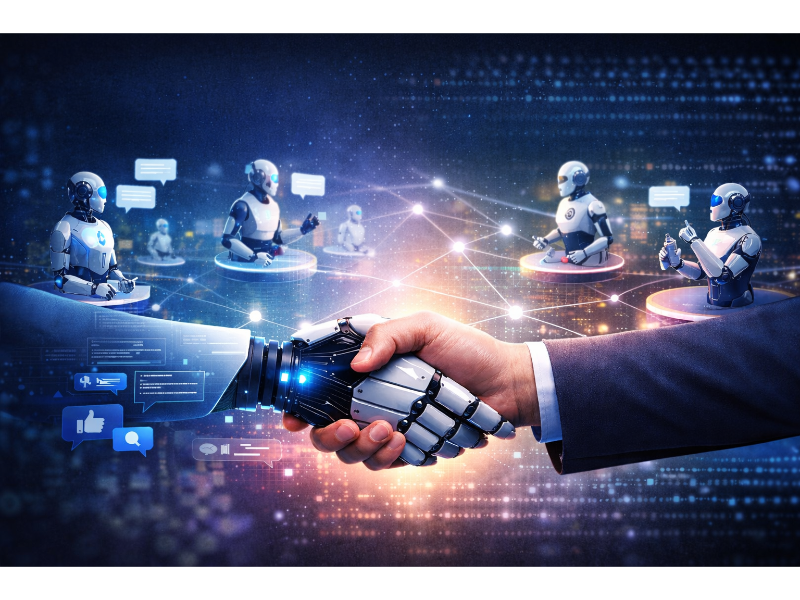
Emerging Trends in AI Agents
The future of AI agents is exciting and includes trends such as:
-
Predictive Analytics: Anticipating needs and trends for smarter decision-making
-
Personalized AI: Customizing experiences based on individual preferences
-
Collaborative Agents: Multi-agent systems working together on complex tasks
MoltBook’s Potential Evolution
AI agents MoltBook is expected to evolve with advanced features:
-
Real-time collaboration between agents for large-scale workflows
-
Enhanced natural language understanding for seamless human interaction
-
Integration with IoT and smart devices for automated environments
Challenges and Ethical Considerations
Risks of AI Agents
Despite their benefits, AI agents present challenges:
-
Bias in decision-making
-
Over-dependence on automated systems
-
Security and privacy risks
Ethical Use of AI Agents MoltBook
To use AI agents responsibly:
-
Ensure transparency in AI-driven decisions
-
Protect sensitive user data
-
Implement monitoring to prevent misuse
FAQ – AI Agents and MoltBook
Q1: What are AI agents?
A: AI agents are autonomous software programs that perceive their environment, make decisions, and take actions to achieve specific goals.
Q2: How do AI agents MoltBook work?
A: MoltBook integrates intelligent AI agents into workflows, automating tasks, providing insights, and continuously learning from interactions to improve performance.
Q3: What types of AI agents exist?
A: There are reactive agents, deliberative agents, hybrid agents, and learning agents, each with unique capabilities and applications.
Q4: Can AI agents be used in daily life?
A: Yes, from smart home devices to virtual assistants and personalized app recommendations, AI agents are widely used in daily life.
Q5: What industries benefit most from AI agents?
A: Finance, healthcare, logistics, education, marketing, and customer service are among the top industries leveraging AI agents.
Q6: Are AI agents safe to use?
A: Generally, yes, but ethical considerations, privacy protection, and monitoring are crucial to ensure safe and responsible use.
Q7: Why choose MoltBook over other AI platforms?
A: MoltBook offers a user-friendly interface, integration capabilities, intelligent decision support, and continuous learning, making it ideal for businesses and individuals.
Conclusion
AI agents are transforming the digital landscape, enhancing efficiency, intelligence, and automation across industries and daily life. Understanding what are AI agents and their applications provides a competitive advantage in adopting AI technologies.
AI agents MoltBook takes this further, providing a versatile platform for businesses and individuals to implement intelligent, learning-based agents that automate tasks, provide actionable insights, and adapt over time. By leveraging AI agents and MoltBook, the future of technology becomes smarter, more efficient, and increasingly human-centric.