
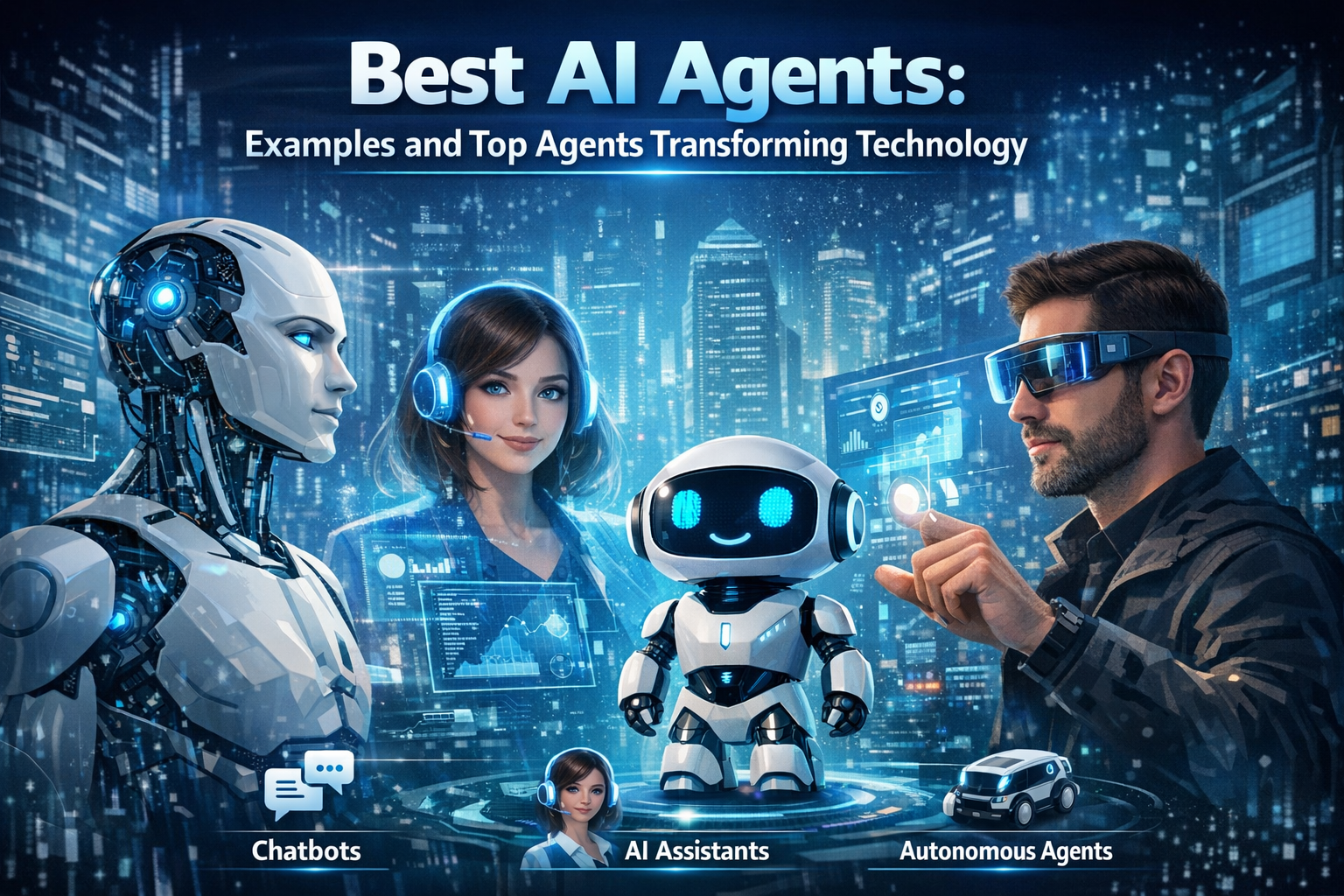
Artificial Intelligence (AI) has revolutionized the way we interact with technology, from everyday tasks to complex business processes. Among the most exciting innovations in AI are AI agents, intelligent systems capable of autonomous decision-making, learning, and problem-solving. These AI agents have evolved into essential tools across multiple industries, transforming the way businesses, healthcare providers, and even gamers operate.
In this article, we will explore what AI agents are, their types, the best AI agents, real-world examples, and the future of this transformative technology.
Introduction to AI Agents
What Are AI Agents?
An AI agent is a software program or system designed to perceive its environment, process information, and take actions to achieve specific goals. Unlike traditional programs that follow rigid instructions, AI agents can adapt, learn, and make decisions based on changing data or circumstances.
These agents can range from simple rule-based systems to advanced learning agents powered by machine learning and natural language processing. For instance, virtual assistants like Siri or Google Assistant are everyday examples of AI agents that interact with humans, understand queries, and execute tasks autonomously.
Importance of AI Agents in Today’s World
The importance of AI agents cannot be overstated. They help businesses automate repetitive tasks, provide personalized customer service, assist in research, and optimize operations. Industries such as healthcare, finance, logistics, and entertainment are leveraging AI agents to improve efficiency and innovation.
By reducing human error and accelerating decision-making, AI agents are not just tools but strategic assets that reshape the way organizations function.

Types of AI Agents
AI agents can be categorized based on their functionality and decision-making processes. Understanding the types helps in choosing the best AI agents for specific applications.
Simple Reflex Agents
Simple reflex agents operate by responding to specific stimuli from their environment. They do not store past experiences or plan for future actions.
Example: A thermostat that turns on heating when the temperature drops below a threshold is a simple reflex agent.
Model-Based Agents
Model-based agents maintain an internal representation of the world. They use this model to predict outcomes and make decisions accordingly.
Example: Robotics systems that navigate warehouses using a map and sensor data are model-based agents.
Goal-Based Agents
Goal-based agents act to achieve specific objectives. They evaluate possible actions to determine which will best meet their goals.
Example: AI-powered scheduling software that allocates resources efficiently based on deadlines and priorities.
Utility-Based Agents
These agents not only achieve goals but aim to maximize a “utility” function, which quantifies how good each outcome is.
Example: Financial AI agents that balance investment risks and returns to optimize portfolios.
Learning Agents
Learning agents improve their performance over time by learning from experiences and adapting their behavior.
Example: Chatbots that evolve their responses based on previous interactions with users are AI agents examples of learning agents.
Best AI Agents in 2026
AI agents are being deployed in diverse industries, transforming workflows and enhancing human capabilities. Here are some of the best AI agents currently available:
AI Agents for Business and Productivity
In business, AI agents automate repetitive tasks, provide insights from large datasets, and assist decision-making. Tools like AI-powered project management agents streamline scheduling, track performance metrics, and generate actionable reports.
AI Agents for Healthcare
Healthcare has benefited immensely from AI agents. Diagnostic agents can analyze medical images, predict patient risks, and recommend treatments. These AI agents not only reduce diagnostic errors but also save critical time in emergency care.
AI Agents in Customer Service
Customer service has been transformed by conversational AI agents, including chatbots and virtual assistants. These agents handle routine queries, provide product recommendations, and even escalate issues to human agents when necessary.
AI Agents in Gaming and Entertainment
The gaming industry uses AI agents to control non-player characters (NPCs) that adapt to player behavior, making games more challenging and immersive. Streaming platforms also use recommendation agents to suggest content based on viewing patterns.

Real-World AI Agents Examples
Here are some notable AI agents examples across various domains:
OpenAI ChatGPT and Conversational Agents
ChatGPT and similar conversational AI agents can understand natural language, provide explanations, and engage in meaningful dialogues. They are widely used for customer support, content creation, and personal assistance.
Autonomous Vehicles as AI Agents
Self-driving cars use AI agents to navigate roads, avoid obstacles, and optimize routes in real-time. Tesla’s Full Self-Driving system and Waymo’s autonomous taxis are prime examples.
Smart Home Assistants
AI agents like Google Assistant, Amazon Alexa, and Apple Siri manage smart home devices, control appliances, and answer questions, making daily life more convenient.
AI Agents in Finance and Trading
AI agents are increasingly deployed in financial markets to analyze trends, predict stock movements, and execute trades faster than human traders, offering a competitive advantage.
Popular AI Agents
| AI Agent | Type | Key Features | Best Use Case |
|---|---|---|---|
| ChatGPT | Learning Agent | Natural language understanding, conversation, content generation | Customer support, content creation |
| Google Assistant | Goal-Based Agent | Voice commands, smart home control, personalized suggestions | Daily productivity, smart home management |
| IBM Watson | Utility-Based Agent | Data analysis, predictive modeling, decision support | Healthcare, business analytics |
| Tesla FSD | Model-Based Agent | Autonomous navigation, obstacle detection | Self-driving cars |
| Amazon Alexa | Reflex + Learning | Voice control, task automation, adaptive responses | Smart home, entertainment |
How to Choose the Best AI Agents for Your Needs
Selecting the right AI agents requires considering several factors:
Factors to Consider
-
Performance: How effectively the agent completes tasks
-
Scalability: Can it handle increasing workloads?
-
Learning Ability: Does it improve over time with experience?
-
Integration: How easily it connects with existing systems
Comparing Popular AI Agents
By evaluating the features, advantages, and limitations of different AI agents, businesses and individuals can select the most suitable options for their requirements. The comparison table above provides a snapshot of leading AI agents and their best applications.
Challenges and Future of AI Agents
Current Limitations of AI Agents
Despite their capabilities, AI agents face challenges:
-
Ethical concerns and bias in decision-making
-
Dependence on large datasets
-
Limitations in handling ambiguous or complex human situations
Future Trends in AI Agents
The future of AI agents is promising:
-
Agents with enhanced emotional intelligence
-
Greater personalization in services and recommendations
-
Integration with emerging technologies like AR/VR and IoT
-
Autonomous collaboration among multiple AI agents in complex environments
Conclusion
AI agents are transforming technology and redefining what machines can do autonomously. From healthcare and finance to gaming and smart homes, these intelligent systems improve efficiency, accuracy, and user experience. By exploring the best AI agents and real-world AI agents examples, businesses and individuals can leverage this technology to unlock new opportunities and stay ahead in an increasingly digital world.